
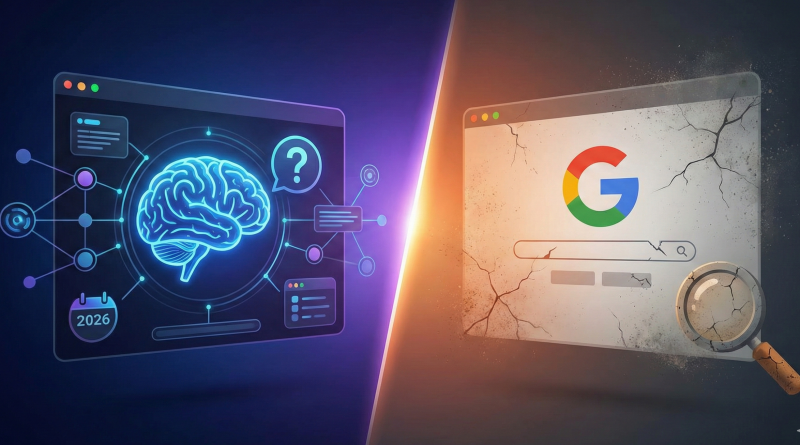
Perplexity AI vs. Google Search: Is the Traditional Search Engine Dying in 2026?
Search engines have been the gateway to the internet for more than two decades, and Google has dominated that space almost unchallenged. But the rise of artificial intelligence powered tools like Perplexity AI is forcing many users to rethink how they search for information. As we approach 2026, a provocative question is gaining traction: is the traditional search engine model starting to die?
This article compares Perplexity AI and Google Search, analyzing how user behavior is changing and what the future of online search might look like.
What Is Perplexity AI and Why Is It Growing So Fast?
Perplexity AI is an AI driven search assistant that delivers direct answers instead of a list of links. Rather than forcing users to open multiple websites, it summarizes information in real time and cites its sources clearly.
This approach aligns perfectly with how modern users consume content. People want fast, clear answers without scrolling through ads, popups or SEO optimized fluff. Perplexity feels more like having a research assistant than using a search engine.
Its growth has been fueled by students, professionals and tech savvy users who value efficiency over exploration.
How Google Search Still Dominates
Despite the rise of AI alternatives, Google Search remains incredibly powerful. It indexes trillions of web pages, updates results constantly and integrates seamlessly with services like Maps, YouTube and Gmail.
Google excels when users want options, not just answers. Shopping comparisons, local businesses, news updates and multimedia searches still work better on Google.
Additionally, Google’s advertising ecosystem funds a massive portion of the free internet. This scale is something AI search tools cannot easily replicate.
The Key Difference: Answers vs. Discovery
The fundamental difference between Perplexity AI and Google Search lies in intent.
Perplexity is designed for answers. You ask a question and receive a concise response with sources. This is ideal for research, explanations and learning.
Google is designed for discovery. It shows multiple perspectives, websites and formats, allowing users to explore deeply.
In 2026, this distinction matters more than ever. As AI improves, more users prefer direct answers for informational queries, reducing the need to click through traditional search results.
Is Google Losing Traffic to AI Search?
There is growing evidence that informational searches are shifting toward AI tools. Questions like “What is,” “How does,” or “Explain” are increasingly handled by AI assistants rather than search engines.
However, Google is not standing still. Features like AI generated summaries and search generative experiences show that Google is actively adapting to the same trend.
The real threat is not total replacement, but reduced engagement. Fewer clicks mean fewer ad impressions and a weaker incentive for content creators.
What This Means for Websites and SEO
For bloggers and publishers, this shift is critical. AI tools often summarize content without sending traffic back to the original source.
This forces websites to rethink their strategy. Unique insights, original data, strong opinions and firsthand experience become more valuable than generic informational content.
SEO in 2026 will likely focus less on ranking for simple questions and more on authority, trust and depth.
Will Traditional Search Engines Die?
The short answer is no, but they will evolve dramatically.
Google Search is unlikely to disappear, but its role may change. Instead of being the default starting point for every question, it may become one tool among many.
AI search tools like Perplexity will dominate quick answers and research tasks, while Google will remain essential for navigation, commerce and discovery.
The future is not about replacement, but coexistence.
Perplexity AI vs. Google: Which Should You Use?
The choice depends on your needs.
If you want fast, cited answers and efficient research, Perplexity AI is often superior. If you want to explore, compare products, find local services or consume multimedia, Google remains unmatched.
Many users in 2026 will likely use both, depending on the task.
Final Thoughts: A New Era of Search
So, is the traditional search engine dying in 2026? Not exactly, but it is no longer the only game in town.
Perplexity AI represents a shift toward answer based search, challenging Google’s long standing dominance. This competition benefits users, but it forces platforms, publishers and advertisers to adapt.
Search is not dying. It is evolving, and AI is at the center of that transformation.
Frequently Asked Questions
Is Perplexity AI better than Google?
It depends on the use case. Perplexity excels at answers, while Google excels at discovery.
Will AI replace SEO?
No, but SEO will change significantly toward authority and originality.
Does Perplexity AI show ads?
Currently, it focuses more on user experience than advertising.
Should content creators be worried?
Concerned, yes. But those who adapt early can still thrive.