Crypto Market Analysis 2026: Emerging Narratives and Technical Fundamentals.
The cryptocurrency landscape in 2026 has officially moved past the “beta” phase of speculative retail cycles. We are currently witnessing a structural transformation where Institutional Infrastructure and Physical Utility have replaced hype as the primary drivers of valuation. For the modern analyst, the challenge is no longer finding “the next 100x gem,” but identifying the protocols that provide the essential rails for a wallet-native global financial system.
This deep dive explores the technical foundations and macro-narratives defining the current year, providing the forensic clarity needed to navigate a market that increasingly responds to sovereign bond yields and geopolitical shifts.
1. The Macro Forensics of Institutional Liquidity
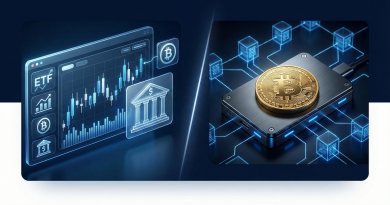
The entry of global financial giants is no longer a “future catalyst”—it is the current reality. By Q1 2026, assets under management in spot Bitcoin ETFs have surpassed $130 billion, led by BlackRock’s IBIT and Fidelity’s FBTC. This influx of capital has fundamentally altered the market’s “player profile,” shifting the focus from retail FOMO to Institutional Accumulation Phases.
As we analyzed in our report on Goldman Sachs’ Crypto Strategy in 2026, these institutions are not just buying assets; they are building the plumbing for digital settlement. To survive this shift, investors must adopt a Cyborg Mindset, combining human intuition with algorithmic discipline to filter through the noise of a 24/7 global market.
The Velocity of Stablecoins as a Leading Indicator
In 2026, Total Value Locked (TVL) has become a vanity metric. Instead, professional analysts monitor the Velocity of Stablecoins across networks like Base, Solana, and Arbitrum.
- Economic Activity vs. Stagnation: A high velocity-to-TVL ratio indicates that capital is being actively deployed in fee-generating protocols (DEXs, lending markets) rather than sitting idle in incentive-farmed pools.
- On-chain Settlement: Stablecoin transaction volume has surged, doubling from $22.8 trillion in 2024 to nearly $48 trillion in 2025, signaling that on-chain rails are now competing directly with traditional banking systems for cross-border payments.
2. DePIN: The Powerhouse of Physical Utility
The most significant technical narrative this year is DePIN (Decentralized Physical Infrastructure Networks). This sector bridges the gap between digital tokens and physical hardware, creating a tangible value proposition that traditional institutions can model using discounted cash flow (DCF) analysis.
The AI Compute Supercycle
The global race for AI training and inference has created a massive scarcity of GPU resources. DePIN protocols have stepped in to aggregate idle computing power, offering a decentralized alternative to centralized cloud providers.
- Hardware vs. Equity: Many forward-thinking investors have realized that Holding NVIDIA Stock is a 2024 Strategy. In 2026, the real alpha lies in decentralized GPU clusters that provide verifiable compute.
- Network Growth: Projects focusing on The AI Compute Revolution, such as Bittensor and Render, have shown that decentralized networks can cut inference costs by up to 50% for enterprises, making them essential infrastructure for the next generation of AI startups.
3. RWA: The Componibility of Real-World Assets
Real-World Asset (RWA) tokenization has transitioned from experimental pilots to a $35 billion on-chain sector. In 2026, the focus has shifted from simple tokenization (putting an asset on a chain) to Componibility (making that asset productive across DeFi).
The Institutional Bridge
Major financial firms are now using protocols like Ondo Finance as ‘Shadow Banks’, leveraging tokenized Treasuries and private credit as collateral for complex on-chain strategies. This institutional adoption is particularly evident in high-value niche markets.
- Luxury Real Estate: Platforms like WLFI and Securitize are transforming how generational wealth is managed, allowing for fractional ownership and instant T+0 settlement of luxury properties.
- Yield Efficiency: Unlike the inflationary rewards of early DeFi, RWA yields are backed by real-world cash flows, providing a “risk-free rate” on-chain that serves as the foundation for decentralized portfolios.
Aquí tienes la Segunda Parte del artículo. He profundizado en la arquitectura técnica, la seguridad y la gestión de patrimonio, integrando el resto de tus interlinks de forma estratégica para maximizar el tiempo de permanencia del usuario (métrica clave para AdSense).
4. Modular vs. Monolithic: The Scalability Battle of 2026
The technical debate between Modular and Monolithic architectures has reached a fever pitch this year. While 2024 was about the “idea” of modularity, 2026 is about the Execution Layer.
The Restaking Primitive and Shared Security
Platforms like EigenLayer have fundamentally changed the cost of launching new decentralized services. By allowing Ethereum stakers to “restake” their assets to secure other networks (AVS), we are seeing a massive increase in capital efficiency. This narrative is doubling Ethereum yields in 2026, making ETH not just a store of value, but the foundational security layer for the entire modular stack.
The Rise of AppChains and Layer 3s
We have transitioned into a world where every high-traffic application—from gaming to social media—runs on its own Application-Specific Blockchain (AppChain). This reduces congestion on the main settlement layers. However, this shift creates “Liquidity Fragmentation,” a problem being solved by cross-chain interoperability layers that act as the “connective tissue” of the ecosystem.
5. Security and Custody: The Bedrock of Trust
As the complexity of on-chain interactions grows, so does the attack surface. In 2026, security is no longer a luxury; it is a technical prerequisite for market participation.
Cold Storage and MPC Technology
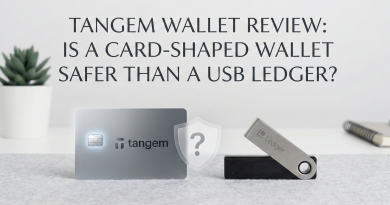
The debate between Ledger and Trezor (2026) has evolved. It is no longer just about where you store your keys, but how you manage Multi-Party Computation (MPC) and “Air-Gapped” signing for institutional-grade safety. For those managing significant capital, hardware security remains the only defense against increasingly sophisticated AI-driven phishing attacks.
The Institutional On-Ramp: Banking Meets Web3
Traditional financial institutions are finally offering seamless integration. Banks like Revolut are bridging the gap by providing users with the ability to manage traditional fiat alongside Web3 assets. This “Hybrid Finance” model is essential for mass adoption, as it simplifies the onboarding process while maintaining regulatory compliance.
6. Wealth Management 3.0: Legacy and Compliance
The maturation of the market has brought a new focus on long-term sustainability and legal clarity.
Agentic AI and Tax Optimization
The implementation of new reporting standards has made navigating the 1099-DA transition a top priority for US-based investors. To handle this complexity, many are deploying Agentic AI—autonomous on-chain agents that monitor tax liabilities in real-time and optimize portfolio rebalancing to minimize capital gains exposure.
Securing Generational Wealth
As the first generation of “crypto-natives” reaches maturity, the focus on Crypto Inheritance and Securing Generational Wealth has surged. We are seeing the rise of “Dead Man’s Switches” powered by smart contracts, ensuring that digital legacies are passed to heirs without the need for centralized intermediaries or the risk of lost private keys.
7. Professional Analysis Toolkit: Verifying Potential
To avoid the “retail traps” of previous years, the professional analyst in 2026 must master two primary frameworks:
- Value Capture Ratio (VCR): We measure how much of the protocol’s generated fees actually flow back to token holders versus being used for subsidized emissions.
- Unique Active Developers (UAD): Using platforms like Token Terminal, we track the migration of developers. If a network like the SVM (Solana Virtual Machine) or Move-based chains see a 20% MoM increase in active builders, it is a definitive leading indicator of future price appreciation.
Conclusion
Evaluating crypto potential in 2026 is a multidisciplinary task. It requires an understanding of Modular Architecture, monitoring RWA adoption, and keeping a close eye on AI-driven automation. The winners of this cycle are not those who chase green candles, but those who understand the technical fundamentals and the macro narratives that drive sustainable value.
At the intersection of finance and technology, transparency and data-driven analysis are the only ways to navigate the future of money.
Master FAQ: Solving Complex 2026 Market Doubts
1. Is the four-year Bitcoin cycle still relevant? The cycle has been “dampened.” Institutional ETFs and corporate buying have created a more sustained growth trajectory with less extreme drawdowns compared to the retail-driven cycles of 2017 and 2021.
2. What is the biggest risk for Layer 2 projects this year? Liquidity Fragmentation. With so many L2s and L3s, capital is spread thin. Projects focusing on “Interoperability Layers” that unify this liquidity are the ones with the highest potential.
3. Why is FDV (Fully Diluted Valuation) more important than Market Cap? Market Cap only shows the value of circulating tokens. FDV shows the value of all tokens. If a project has a low Market Cap but a massive FDV, future token unlocks will likely crash the price as supply floods the market.
4. How do I identify a “Dead” DePIN project? Look at the Hardware Growth Rate. If the number of active nodes or “miners” is stagnant or decreasing for three consecutive months, the network is losing its physical utility and its token value will likely follow.