Beyond the Chip: Why AI Agents and Decentralized Inference are the Real Alpha in 2026
The investment landscape of 2024 and 2025 was defined by a single, monolithic trade: Hardware Accrual. Investors who bet on Nvidia (NVDA) and the “physicality” of AI saw historic returns as data centers scrambled for H100s and B200s. However, as we move through the first quarter of 2026, the narrative has fundamentally pivoted.
The market has reached “Peak Silicon.” While hardware remains the backbone, the Value Capture has shifted from the training of models to the Inference Economy and the rise of Autonomous AI Agents. For the aggressive investor, the “Alpha” is no longer in the maker of the engine, but in the autonomous systems driving the vehicle.
1. The Inference Revolution: From Capital Expense to Operational Efficiency
In 2026, the AI industry has moved past the “Brute Force” era. Most major Large Language Models (LLMs) have finished their primary training phases. The world is now focused on Inference: the process of an AI actually running and answering queries.
The Problem with Centralized Compute
Nvidia’s dominance in training is undisputed, but inference is a different beast. Centralized cloud providers (AWS, Azure, Google Cloud) are facing three critical bottlenecks:
- Power Grid Saturation: Physical data centers are hitting the limits of local power grids.
- Egress Fees: Moving massive amounts of AI-generated data out of centralized clouds is becoming prohibitively expensive.
- Latency: Real-time AI applications require compute to be closer to the end-user (The Edge).
The DePIN Solution
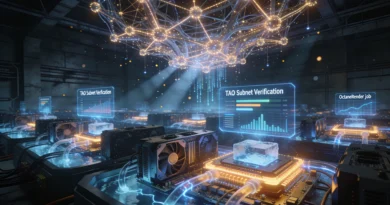
This is where Decentralized Physical Infrastructure Networks (DePIN) take the lead. By 2026, protocols like Akash (AKT) and Render (RENDER) have matured into global marketplaces where underutilized GPUs from independent data centers to high-end consumer rigs are aggregated.
- The Cost Delta: Running inference on a DePIN network in 2026 is 45% to 60% cheaper than on centralized counterparts.
- The Competitive Advantage: For a startup deploying a fleet of AI agents, this cost difference is the gap between profitability and bankruptcy. As an investor, owning the “Inference Layer” is the 2026 equivalent of owning the “Fiber Optic Layer” in the early 2000s.
2. Agentic AI: The First On-Chain Economic Actors
The most profound shift in 2026 is that AI is no longer a tool; it is a Client. For the first time, we are seeing AI Agents autonomous programs designed to achieve specific goals operating with their own financial sovereignty.
The “Agentic” Economy
Unlike human users, AI agents need a specific set of financial rails:
- Micro-payments: An agent might need to perform 10,000 tiny transactions per hour to pay for compute, data, and API access. Traditional banking (ACH, SWIFT) cannot handle this.
- Smart Contracts: Agents use code as their “legal framework.” They hire other agents and settle payments via smart contracts.
- Programmable Wealth: As discussed in our 2026 Crypto Strategy Manifesto, AI agents are the primary drivers of Account Abstraction adoption. They don’t use seed phrases; they use multi-signature smart accounts.
Why This Matters for AdSense and Investors
In 2026, the “Alpha” lies in the protocols that provide the Financial Operating System for these agents. When an AI agent on a network like Bittensor (TAO) or Virtual Protocol earns revenue, it automatically buys back the native token to pay for more compute. This creates a Permanent Buy Pressure that is mathematically linked to the agent’s productivity—a fundamental driver that traditional stocks cannot replicate.
3. Comparative Economics: Training vs. Inference in 2026
To understand why this is a superior investment thesis, we must look at the capital flow.
| Feature | The Training Era (2024-2025) | The Inference Era (2026+) |
| Primary Asset | Nvidia Hardware (CapEx) | Protocol Bandwidth (OpEx) |
| Main Revenue Source | Selling Chips to Big Tech | Running AI Agents for Consumers |
| Market Driver | Scarcity of Silicon | Velocity of Data |
| Best Exposure | NVDA Equity | DePIN & Agentic Tokens |
| Regulatory Risk | Export Bans / Hardware Monopolies | AI Safety / Autonomous Ethics |
4. The Tokenization of Compute Time: AI Agents as Market Makers
In 2026, we are witnessing the birth of a new asset class: Tokenized Compute Time. Unlike Nvidia’s stock, which represents equity in a corporation, AI tokens on DePIN networks represent a right to use a specific amount of GPU power.
Why This is a “Killer App” for 2026
AI agents require predictable costs to operate. To hedge against spikes in GPU demand, developers are now using “Compute Futures” smart contracts that lock in a price for inference today for usage six months from now.
- The Liquidity Factor: These compute credits are tradable. If an AI agent has excess capacity, it can sell its “reserved time” back to the market.
- The Investor’s Edge: This turns a speculative token into a Commodity-Backed Asset. In 2026, holding a token like Akash or Render is functionally equivalent to holding a “Barrel of Digital Oil.”
5. Agentic AI and the RWA Bridge
One of the most complex trends of 2026 is the convergence of Autonomous Agents and Real World Assets (RWA). AI agents are no longer confined to the digital realm; they are managing physical portfolios.
From Digital Code to Physical Ownership
As we explored in our analysis of RWA Tokenization in 2026, AI agents are now being used to:
- Analyze Real Estate Data: Instantly scanning thousands of properties and executing purchases via tokenized deeds.
- Optimize Energy Grids: AI agents on the IoTeX or Peaq networks manage local solar grids, selling excess energy and settling payments in real-time.
- Revenue Capture: This creates a diverse income stream for the protocols. The valuation of an “Agentic AI” token is increasingly tied to the Real-World Revenue these agents generate, moving far beyond the speculative “hype cycles” of the 2024 era.
6. Critical Risks: The “Dead Internet” and Regulatory Blackouts
A brutal and honest analysis requires looking at the failure points. In 2026, the rise of autonomous agents brings two major risks that every aggressive investor must monitor.
The “Dead Internet” Saturation
As billions of AI agents generate content and interact with each other, the “signal-to-noise” ratio on the internet is collapsing.
- The Risk: If 90% of internet traffic is agent-to-agent, the value of traditional “human-centric” advertising (the core of old AdSense models) may decline.
- The Pivot: Advertisers in 2026 are shifting toward “Protocol Sponsorships” and targeting the owners of the agents, not just the clicks.
Regulatory “Kill Switches”
Governments are terrified of autonomous agents that can move millions of dollars without human oversight. In 2026, we are seeing the first “Agentic KYC” laws.
- The Compliance Hurdle: Protocols that do not implement a “Human-in-the-loop” or a “Safety Kill Switch” may be banned from major Western markets. For investors, the Wealth Management transition we’ve discussed is becoming mandatory for agents as well.
Master FAQ: The Inference and Agent Economy
1. Is Nvidia still a buy if the world is moving to Decentralized Inference? Yes, but for different reasons. Nvidia remains the Foundry. They make the best hardware. However, the multiple (the growth rate) of the stock is stabilizing. If you want aggressive growth, the protocols that organize that hardware (DePIN) offer more upside potential in 2026.
2. How do AI agents actually pay for things? They use Account Abstraction (ERC-4337). They don’t have a private key that a human can lose. Instead, they operate via a smart contract that has specific rules: “You can spend $100 per day on GPU power but nothing else.” This makes them safe and scalable.
3. What is the most promising DePIN sub-sector in 2026? AI-Edge Computing. As we’ve seen with the growth of Toncoin and Telegram Mini Apps, users want AI that responds instantly on their phones. Protocols that can provide low-latency inference at the edge are the clear winners.
4. Will AI agents replace human investors? They won’t replace the owner, but they will replace the execution. In 2026, the most successful investors “own” a fleet of agents that scan the markets 24/7, while the human sets the high-level strategy and risk parameters.
Conclusion: Investing in the “Brain” vs. the “Body”
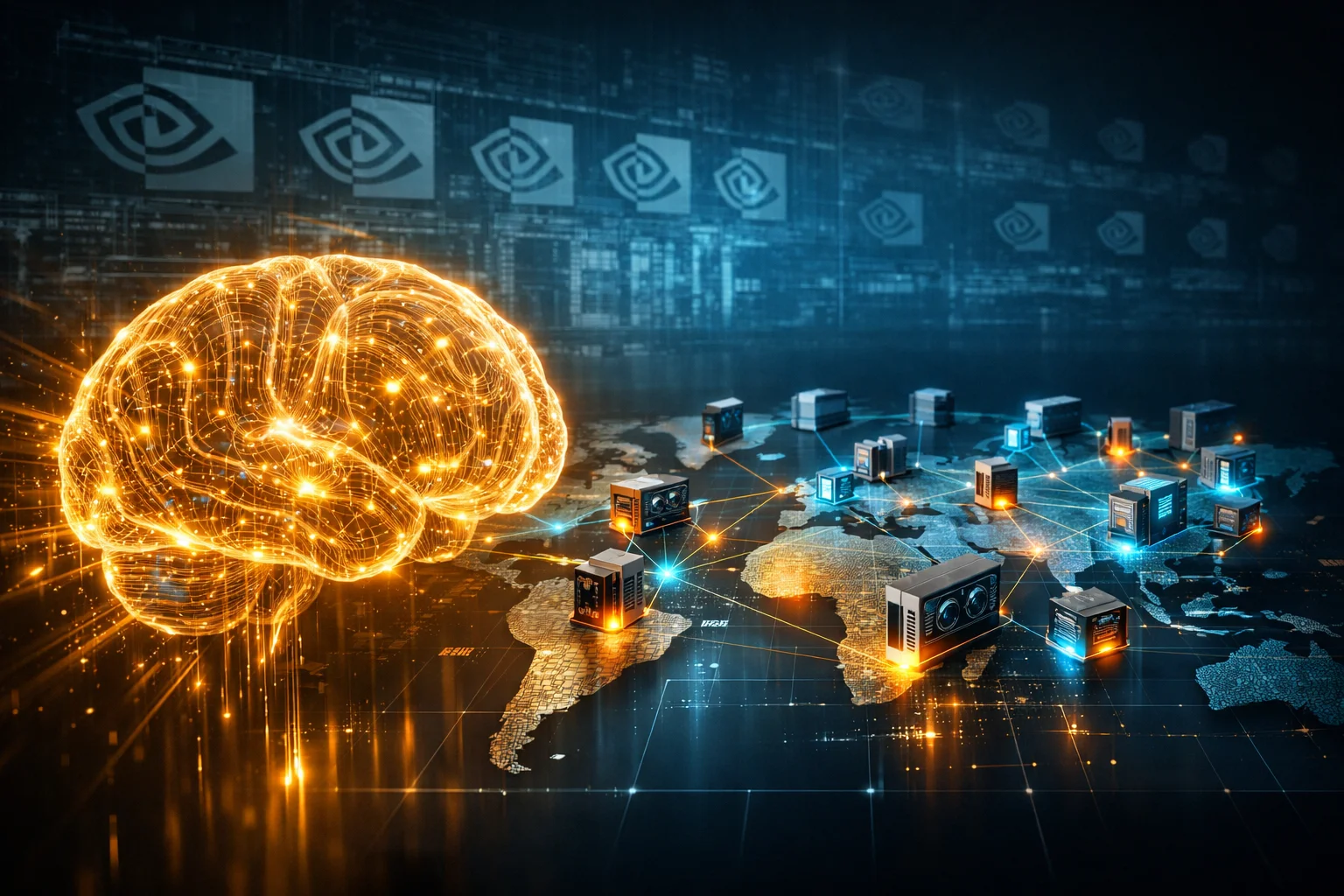
The 2024-2025 cycle was about the “Body” of AI the silicon, the data centers, and the energy. The 2026 cycle is about the “Brain” the inference protocols and the autonomous agents that make decisions.
Nvidia will remain a cornerstone of every portfolio, but the true Alpha—the asymmetric, life-changing returns—is now found in the decentralized networks that provide the financial and computational rails for the first generation of autonomous economic actors. The “Chip Era” has matured; the “Agent Era” has just begun.