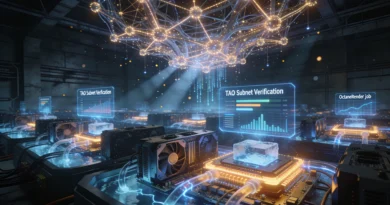

DePIN 2026: The Critical Convergence of AI and Decentralized Physical Infrastructure Networks
The End of Centralized Hardware Monopolies
The next evolution of blockchain technology is no longer confined to digital ledgers; it is anchored in high-density physical assets. DePIN (Decentralized Physical Infrastructure Networks) represents a fundamental shift in how global utility networksfrom wireless 6G nodes to GPU clusters are funded and operated.
By 2026, the narrative has moved past simple “token rewards.” DePIN is now the primary response to the high-cost, closed-ecosystem models of traditional cloud and energy giants. This is where hardware meets the Liquidity War between Neobanks and Traditional Giants, as decentralized networks require seamless fiat-to-crypto rails to sustain global participants.
1. Beyond the Acronym: How DePIN Actually Functions
DePIN projects replace centralized capital expenditures (CapEx) with a crowd-sourced hardware model. Instead of a single corporation owning the infrastructure, the network is composed of thousands of independent “nodes” providing real-world services.
- The Incentive Flywheel: Participants deploy hardware (sensors, routers, or GPUs) and receive cryptographic tokens. This reduces the initial cost of building a network by nearly 70-80% compared to legacy telecommunications.
- Smart Contract Coordination: Logic layers automate the distribution of tasks and payments, ensuring that a node in Tokyo is paid with the same precision as one in Berlin, without a middleman.
- On-Chain Verification: Transparency is mandatory. Every gigabyte stored or megawatt shared is verified on-chain, preventing the “black box” reporting common in traditional corporate infrastructure.
2. The AI-DePIN Symbiosis: Efficiency via Neural Logic
AI is not just a “feature” of DePIN; it is its operating system. In 2026, managing a decentralized network without machine learning is a recipe for systemic failure.
- Predictive Resource Allocation: AI models analyze real-time demand to shift bandwidth or energy where it is most needed, preventing network congestion before it happens.
- The Anti-Fraud Layer: As reward models become more lucrative, the risk of “sybil attacks” (fake nodes) increases. AI-driven forensics now detect low-quality or spoofed hardware signatures in milliseconds, protecting the integrity of the tokenomics.
- Automated Optimization: Without a central CEO, AI converts raw data into actionable network upgrades, ensuring the physical infrastructure evolves at the speed of software.
3. High-Value Use Cases in the 2026 Economy
The real utility of DePIN is measured by its ability to resolve bottlenecks that traditional companies cannot manage due to a lack of agility or excessive corporate bureaucracy. In this landscape, four specific sectors have taken an absolute lead.
The GPU and Compute Hunger
The training of Artificial Intelligence models has created an unprecedented demand for computing power. While traditional cloud providers have waiting lists of several months to access latest-generation hardware, DePIN networks allow for instantaneous access to distributed GPU clusters. This democratizes AI development by allowing small startups to compete with tech giants by renting idle computing power on a global network.
Wireless and Connectivity 6G
Decentralized wireless infrastructure allows users to deploy their own coverage nodes and earn rewards. This is especially critical in areas where traditional telecommunications operators do not invest due to a lack of immediate profitability. Benefits include minimal deployment costs and a community-owned connectivity network that eliminates the tolls of large corporations.
Energy Grids and Sustainability
Energy DePIN networks focus on decentralized electrical distribution grids. They allow for the tracking of renewable energy and the verification of carbon credits in real time. Blockchain technology ensures total transparency in the origin of the energy while AI optimizes electrical distribution to avoid voltage spikes or charging waste in the grid.
Mapping and Real-Time Sensors
Sensor networks collect real-world data for environmental monitoring and smart city systems. Participants receive incentives for providing accurate and high-quality data. This allows for the creation of climatic or traffic maps with a resolution that current satellites cannot match.
4. The Execution Audit: 2026 Risk Matrix
For an investor or a node operator, understanding the difference between the traditional model and the DePIN model is vital for risk management.
| Risk Vector | Traditional Model | DePIN Model 2026 |
| Ownership | Centralized in corporations | Decentralized in the community |
| Incentives | Fixed salaries and contracts | Dynamic token rewards |
| Transparency | Opaque internal audits | On-chain forensic verification |
| Scalability | Capital intensive (CapEx) | Driven by the user network |
| Efficiency | Slow manual optimization | Real-time AI logic |
5. The Hardware Risk and Liquidity Constraints
Participating in DePIN is not a purely digital exercise. It carries physical and logistical risk that most retail speculators ignore until it is too late.
Regulatory Friction and Local Governance
Local governments are beginning to closely monitor the deployment of unregulated hardware. Operating energy or telecommunications nodes without the proper licenses can lead to fines or equipment seizures. It is a gray legal area where technology advances faster than the law.
Hardware Obsolescence Cycles
If a project requires the use of specific hardware that becomes obsolete in less than a year, the return on investment disappears. The operator is left with expensive electronic waste while the network migrates toward more efficient standards. The ability to upgrade hardware is as important as the reward itself.
The Off-Ramp Barrier
This is the most critical point for the financial survival of the operator. As we analyzed in our Analytical Audit of Wise vs. Revolut, the ability to convert your DePIN rewards into spendable currency is under constant siege. Many traditional banks flag income from mining or network rewards as high-risk activities, blocking accounts without prior notice. Without an intermediate liquidation layer, your token profits are mere numbers on a screen without real utility.
6. Professional Strategy: From Speculator to Infrastructure Provider
To succeed in this sector in 2026, it is not enough to buy a token and wait for the price to rise. It is necessary to manage the infrastructure as an operational business unit.
There must be hardware diversification. Do not bet all your capital on a single type of node. Combine computing power for AI with connectivity nodes to balance demand cycles. If the AI market cools down, the demand for bandwidth usually remains stable.
It is mandatory to audit the real utility of the protocol. If a DePIN project does not have real customers paying for the service in fiat or stablecoins, the token value is purely speculative. Look for protocols that already have active partnerships with logistics, energy, or telecommunications companies. In 2026, real value comes from the use of the service, not from the project narrative.
7. How DePIN Shapes the Global Future
If this model succeeds in scaling, we will see a drastic reduction in the reliance on centralized providers. The cost of infrastructure worldwide will drop as the profit margins of traditional monopolies are eliminated. It will provide open access to essential services and feed the next generation of autonomous AI systems.
It represents the definitive step from platform ownership to network participation. In this new financial order, those who own the hardware and know how to manage the liquidity of their rewards are the ones who truly control the flow of value. Physical infrastructure is the last refuge of real decentralization in an increasingly monitored world.